
Oprah Underscores Importance Of Retrans
Well, at least Oprah had the courtesy to give the story to WABC New York, the top station in the string of more than 200 that have helped make her a multi-billionaire over the past 24 years.
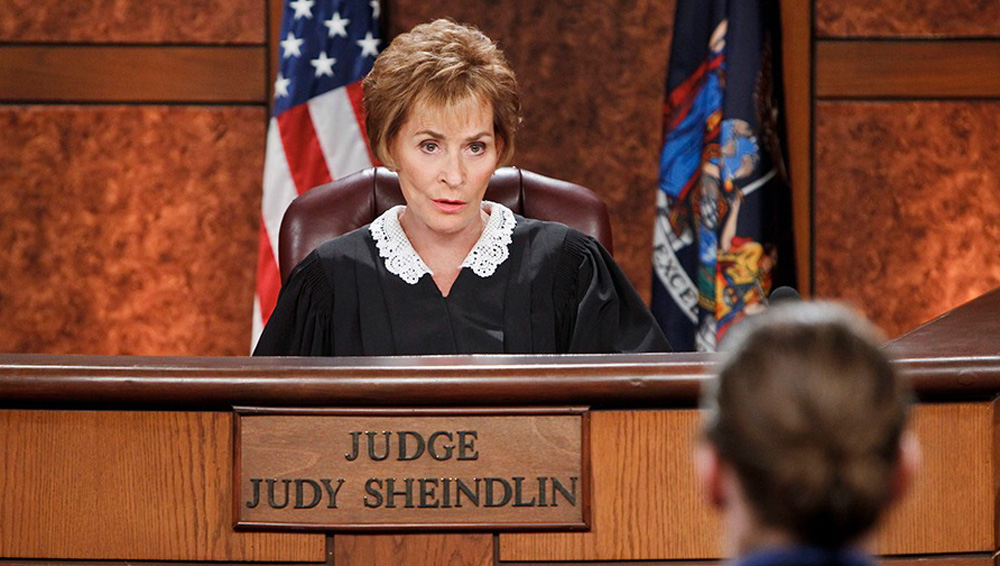
Today, on her talk show, she announced that she will be leaving the show and broadcast syndication to head up an eponymous cable network in partnership with Discovery Communications after her current station deal ends in 2011.

Some broadcasters who carried the show will be relieved that they no longer have to pay her steep license fees. Others who competed futilely against her over the years will be relieved that they no longer have to.
Relief isn't what any broadcaster should be feeling. More like grief.
The loss of Oprah — one of broadcasting's biggest and most enduring stars — to cable is a terrible blow to broadcasting. The outpouring of stories last night and this morning about her decision attests to Oprah's high standing in American culture. No more needs be said about that.
Those same stories note that the move is another indicator of the shifting balance of power in TV from broadcast to cable. It's hard to argue with that.
As broadcasters watch Oprah share her plans with viewers — giving her stations yet another big ratings boost, no doubt — they should be thinking about what they need to do to stop the migration of their best programming to cable and what they need to do to get some new best programming.
When I think about it, I come up with only one answer: retransmission consent revenue. Way more of it. A couple of weeks ago, I said the rallying cry for TV stations in 2010 should be "A Buck a Sub." By that, I mean that in every new retrans deal, TV stations ought to settle for nothing less than $1 per subscriber per month.
That's the number Rupert Murdoch wants for his Fox stations. Why should any affiliate settle for less?
It's nice to think that the money broadcasters need for programming will come from a rebound in advertising or the planned expansion into mobile DTV. But I wouldn't count on it.
The full weight of broadcasting's predicament did not hit me until last year at this time when ESPN outbid Fox for the major college bowls, including the national championship game, and then took the Rose Bowl away from ABC.
Coincidentally, the bowl games go to cable for the first time in 2011, the same year as Oprah. It seems that the Mayan calendar for the broadcasting apocalypse is off by a year.
What's happened to off-net sitcoms is also telling. Before TV stations get a shot at airing them, they must wait a year while they get a weekly airing on some cable network. And then, when the broadcasters do get to strip them, they must do it at the same time a cable network is.
None of these moves, in and of themselves, are fatal. But they add up and they are causing the gap between broadcasting and cable to close — viewer by viewer.

Retrans helps in two ways. Not only does it give broadcasters more money to spend on programming in the form of syndication license fees and reverse comp, but it also takes away money from cable network rivals that have been nibbling broadcasters to death for the past 30 years.

Granted, a buck a sub will not be easy to obtain. Cable and satellite operators will push back hard and Congress may come to their aid thinking they are defending consumers.
But there is some talk of affiliates and stations working together in one fashion or another to increase the take. That's hopeful. Instead of fighting over pennies, they may cooperate to get and share dollars.
Let's do the math on a dollar a sub. A buck times 12 months times 100 million cable and satellite subs is $1.2 billion per year for the O&Os and affiliates of each network. Times that by four networks, and you have transferred $4.8 billion from cable to broadcast.
Broadcasters wouldn't use all that money for programming. They have a lot of debt to pay down and investors to satisfy. But billions would be available to hold on to the programming they've got and to bid aggressively against cable for new and better shows. When the next great sitcom becomes available, wouldn't it be nice to have it first and exclusively on broadcast?
And here's the real beauty part.
When a second-tier cable network like, say, The Oprah Winfrey Network, comes knocking on cable's door asking for a license fee hike, cable will have to say, sorry, we just did deals with the O&Os and affiliates of ABC, CBS, NBC and Fox. We're all tapped out.
Harry A. Jessell is editor of TVNewsCheck. You may contact him at 973-701-1067 or hajessell@newscheckmedia.com.
Copyright 2009 NewsCheckMedia LLC. All rights reserved.
This article can be found online at: http://www.tvnewscheck.comhttp://www.tvnewscheck.com/articles/2009/11/20/daily.5/.
Please visit http://www.tvnewscheck.com/ for more on this and other breaking news concerning the TV broadcasting industry.


Google
Yahoo!
Digg
del.icio.us


Comments (20) - Post a comment
Which is why TV stars should not endorse blank-slate candidates
Basically, there are two ways to fix the problem. One way (which is what Harry Jessell is proposing) is that broadcasters get to feed at the same carriage fee trough as their cable competitors. The other is to cut off the flow of money to the cable networks by regulating in some manner the fees that so-called basic cable networks can charge. Any channel that exceeded those fees would have to be offered as a separate add-on (as is the case with HBO and Showtime).
The second approach would be friendlier to cable/satellite customers -- and would, ultimately, probably be better from an economic viewpoint by forcing a little bit of efficiency into the system. Unfortunately, it also has zero chance of happening unless the political winds shift a lot further to the left than they have so far.