Legal Memo by Michael D. Berg

A History Lesson On Retrans For The FCC

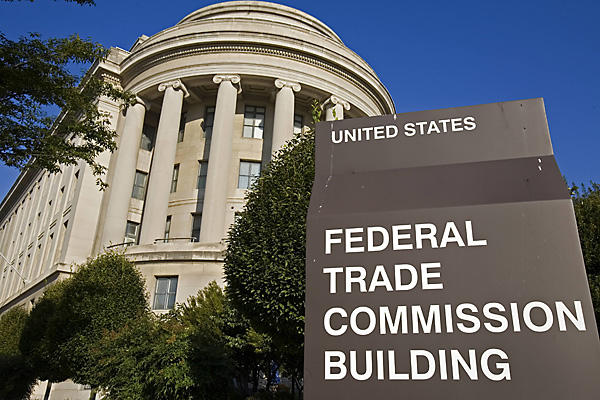
The FCC proceeding seeking comments for possible reform of its retrans rules doesn't square with history as I remember it. For one thing, contrary to what the FCC suggests, broadcasters have tried to negotiate for fees since the retrans law was passed in the early 1990s. The FCC also betrays some bias toward cable, raising questions about how current rules might work against small cable operators, but ignoring how small TV stations are affected.


By
TVNewsCheck,

On March 3, the FCC released a blockbuster Notice of Proposed Rulemaking seeking comment on just about every aspect of its current, longstanding retransmission consent rules. Opening comments are due to the FCC May 18; reply comments, June 3. 

The guts of the notice are proposals to “streamline and clarify” the rules to assure they work effectively to facilitate market-based retrans negotiations between broadcast TV stations and the MVPDs [multichannel video programming distributors] that carry their signals, and to minimize the loss of broadcast TV signals by viewers when negotiations break down.

The proposals would require negotiating parties to notify viewers of prospective loss of MPVD carriage, and the FCC seeks to  define more clearly what the rule requiring “good faith” negotiations means, and end the network nonduplication and syndicated exclusivity rules.

Story continues after the ad

The FCC also seeks input on “any other revisions or additions to its rules that would improve the … negotiation process and help protect consumers from service disruptions.”

No doubt there will be many comments filed and a wide range of views expressed.

I’ve been involved in retrans since before Congress enacted the enabling legislation as part of the Cable Act of 1992, and know the history. While reviewing the Notice and its accompanying FCC press release, I noticed that some parts don’t exactly square with that history, or describe it incompletely.

First, according to the Notice, significant changes in the video programming marketplace since 1992 drive the need for reform now.  The first such change cited by the Notice is broadcasters’ now seeking “monetary compensation” (i.e., direct payment by MVPDs) for consent to retransmit their signals. Historically, the Notice says, cable operators compensated broadcasters by “in-kind compensation” such as advertising time or carriage of additional programming on other channels. 

In fact, broadcasters have long sought cash from MVPDs just as cable networks always have. But for many years until relatively recently, cable operators — essentially in lockstep as an industry — refused to pay cash for the right to carry broadcast signals.

Second, as the Notice itself notes in describing the background of retrans, retrans was adopted because broadcasting was disadvantaged significantly vis-à-vis cable.

Congress found, the Notice says, that “cable operators obtained great benefit from the local broadcast signals that they were able to carry without broadcaster consent or copyright liability, and that this benefit resulted in an effective [governmental] subsidy to cable operators.”

Retrans was created to eliminate that subsidy. Nowhere does the law say, or has it ever said, that broadcasters, alone among programmers, cannot be paid cash for the right to use their signals. 

Third, when the requirement of good faith negotiation was adopted for negotiations, it applied only to broadcasters. Presumably, MVPDs were free to negotiate in bad faith. Not until 2004 was the good faith requirement made reciprocal. The Notice notes this and the fact that the FCC’s only finding to date of violation of the good faith standard was against a cable operator in 2007.

These next points are less about history and more about the objectivity of the Notice.

In its “Consumer Impact” section, the Notice states as fact that Cablevision was forced recently to discontinue carriage of three stations until an agreement was reached with News Corp. This seems an odd assertion by a regulatory agency. It takes two to reach an impasse; it is not for the FCC, except in the context of a particular complaint (and not in a rulemaking notice), to draw the conclusion that Cablevision was “forced” to drop the signals.

According to the Notice, “14 MVPDs and public interest groups” filed the petition that led to issuance of the Notice. All but three are MVPDs.

Finally, the FCC asks parties to comment on “whether small and new entrant MVPDs are typically forced to accept … terms that are less favorable than larger or more established MVPDs, and if so, whether this is fair.”

It is striking that the Notice fails to ask the flip side of that question — whether small and independent TV stations are typically forced  by MVPDS to accept less favorable terms than network-affiliated, larger and longer-established stations. The Notice as a whole takes little notice of the fact that retrans applies to all TV broadcast stations, not just to network-affiliated ones. 

This omission is important to the “fairness” the FCC asks about. It is also significant to the public interest that the FCC must determine. Independent stations often serve minority, foreign language and other historically underserved audiences, thereby increasing diversity of programming and furthering the statutory public interest bases for the FCC’s existence.


This column on TV law and regulation by Michael D. Berg, a veteran Washington communications lawyer and the principal in the Law Office of Michael D. Berg, appears periodically. He is also the co-author of FCC Lobbying: A Handbook of Insider Tips and Practical Advice. He can be reached at 2101 L Street, N.W., Suite 1000 Washington, D.C. 20037; mberg@michaelberglaw.com; or 202-530-8560. Read more of Berg's Legal Memos here.

Edit Article

Tags

Comments (5) -

reality Nickname posted a year ago
Harry- How about a writeup on the YES network and DIRECTV dispute? Yankees fans with DIRECTV might be out of luck but we hear nothing from the FCC or Sen. Kerry
ironfist Nickname posted a year ago
"Presumably, MVPDs were free to negotiate in bad faith." WHAT A GREAT POINT. LOVE IT!
BillyGSO Nickname posted a year ago
Congressmen such as Sen. Kerry and others get all bent out of shape about the possibility of a television station’s signal being pulled from an MVPD because an agreement wasn’t reached. This same group can’t come to an agreement to keep Government from shutting down. Obviously, retrains is a much bigger deal than, oh say, the budget!
fortyniner Nickname posted a year ago
Seems to me that now that the "in-kind" deals are being replaced by cash deals, that the ABC, CBS, NBC and FOX owned cable networks that were launched by MVPDs as part of the in-kind deals are ripe to be dropped.
R Bruce Beckner posted a year ago
I think you're taking advantage of some infelicitous wording in the FCC's NPRM. The NPRM recognized the fact that, prior to 1992, MVPDs had the obligation to pay for retransmission of copyrighted programming. However, the compulsory license scheme set up in Section 111 of the 1976 Copyright Act required payment to be made only for retransmitted non-local broadcast signals, not retransmitted local signals. The underlying assumption was: why make cable subscribers pay for something that their next door neighbor can get over the air for free? Experience has shown, somewhat counter-intuitively, that even the presence of a local broadcast signal on cable or DBS adds value to the subscriber. So, it seems like the real remedy should be to change Section 111 to recognize that fact, and require copyright royalty payments for carriage of local signals. Frankly, it appears that the real value comes from live sports programming -- the Super Bowl, the World Series, etc. Because of that and because the network pays handsomely for the rights to those events, it seems likely that, one way or the other, the network is going to end up with a big piece of that money, whether it comes from an amended Section 111 of the Copyright Act (would would require payment for the compulsory license to retransmit local signals) or from retransmission consent fees.

Classifieds

The Market

Symbol Last Change (%)
Nasdaq 2874.04 -19.72 (-0.68%)
NYSE 7592.82 -42.99 (-0.56%)
S&P 500 1324.80 -5.86 (-0.44%)
Updated 05/17 1:08a ET Quotes delayed at least 20 mins.
Source: Financial Content

Ratings

Overnights, adults 18-49 for May 15, 2012
  • 1.
    3.2/9
  • 2.
    2.8/8
  • 3.
    2.5/7
  • 4.
    1.7/5
  • 5.
    1.6/5
  • 6.
    0.4/1
Source: Nielsen
Reviews
Opinions
Features
  • David Wiegand

    Fans of Sex and the City have finally gotten their wish: Their beloved sex-focused sitcom is back on the air ... sort of. The four women have become four men, of course, and the writing isn't as good. Oh, and the laugh track so annoying, it's offensive. And did I mention that the costumes would be considered fashionable if you were holding a yard sale? Men at Work on TBS is almost quaint, it's so old fashioned. If it had any meat on its bones, you'd be tempted to say it's the sadly ignoble epitome of TV's long-festering emasculated-men syndrome. But it's so much of a big, forgettable, innocuous shrug, it's not even worth any actual vitriol.

  • Mike Hale

    The USA Network's motto is "Characters Welcome." Apparently they're especially welcome if they resemble Oscar Madison and Felix Unger. Already stocked with Odd Couple knockoffs in Psych and White Collar, USA adds to its inventory Common Law, another comic crime-fighting show about mismatched partners. But this latest entry exhibits very little of that kind of spark as it tries to wring laughs from the juxtaposition of counseling and police work. It looks too flat and schematically plotted to succeed as the type of lightweight summer fun we’ve come to expect from USA.

  • Joanne Ostrow

    Johnny Carson: Fantastic entertainer, miserable human being. That's the lasting message of Johnny Carson: King of Late Night, the new PBS American Masters film, a rich history of a rare product of television who dominated the small screen for decades. Unprecedented access to personal archives plus all existing episodes of The Tonight Show (1962-92), distinguishes this film by Peter Jones. Telling interviews with family and colleagues, including second wife Joanne Carson, former Tonight Show executive producer Peter Lassally and a number of biographers sharpen the picture. The clips are carefully selected to illustrate specific personality traits, the performance highlights are given context and meaning beyond funny lines and memorable moments.

  • Hank Stuever

    AMC's The Pitch is a sharply-made if slightly off-putting reality series that follows different advertising agencies each week as they compete for new accounts. The inspiration for the show — made clear by its own ad campaign — is to harness some of the verve generated by the network's acclaimed Mad Men. The Pitch has a way of making the ad world seem like a real downer — a repugnant exercise in egotism laced with depressing bouts of creative compromise.

  • Tim Goodman

    HBO's Veep stars Julia Louis-Dreyfus as former Sen. Selina Meyer, who accepts the vice presidential duty and regrets it almost immediately: She has no real power and gets muscled by the Senate, Congress and the (so-far-unseen) president, who delegates all the truly crappy jobs to her. Louis-Dreyfus has found perhaps her best post-Seinfeld role and takes to it with such fervor — the constant swearing, the barely veiled desire to become president, the unhappy give-and-take with other politicians and a delightful disdain for average citizens — that you can't help but applaud what is clearly an Emmy-worthy effort. Her work alone makes Veep a gem, but there's even more to like.

This advertisement will close automatically in  second(s). You will see this ad no more than once a day. Skip ad