
Executive Session with Doug Franklin

Merging Media Powers Cox's Digital Drive

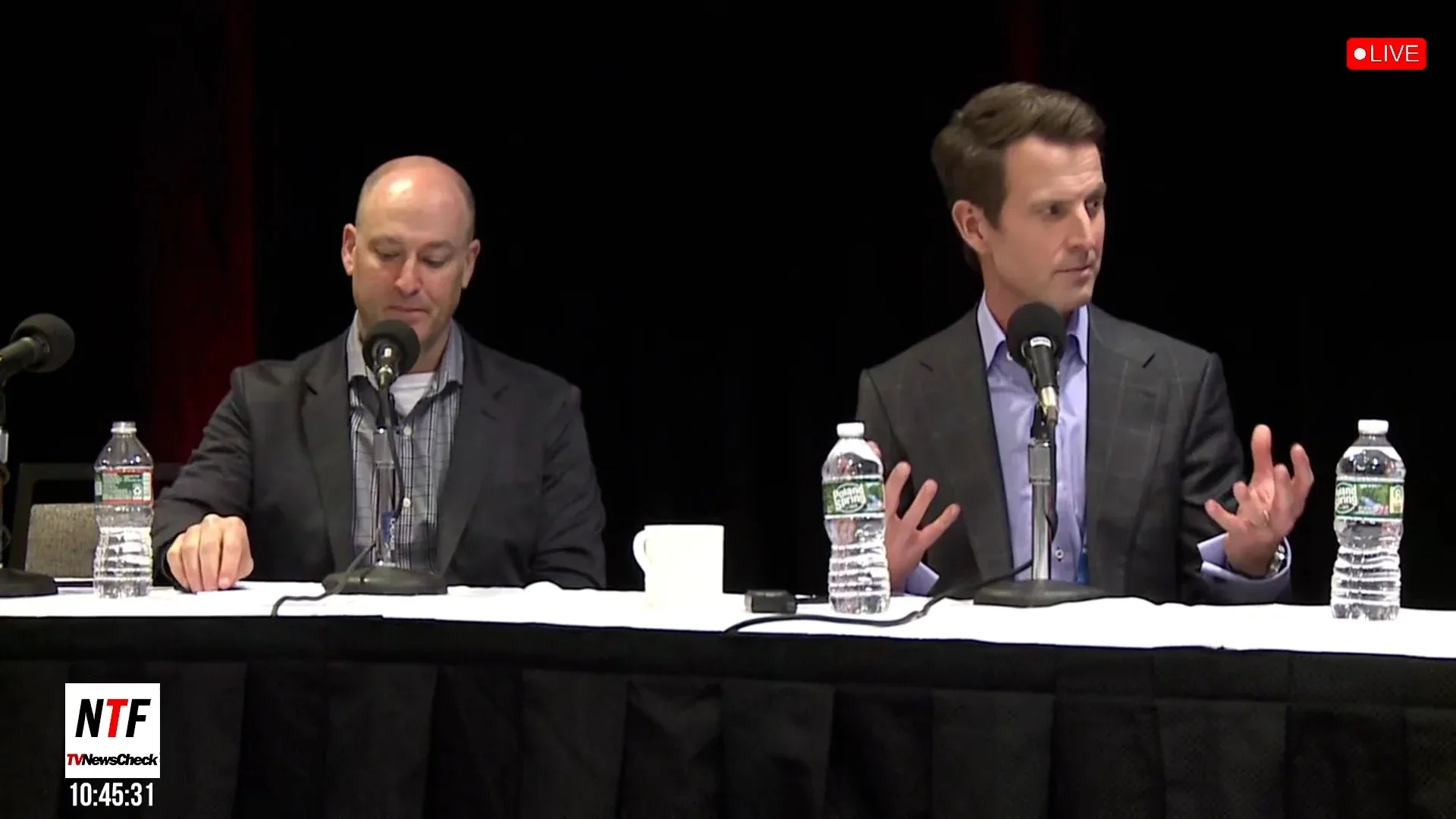
The president of Cox Media Group is focused on strengthening the digital offerings of the 15 TV stations, eight newspapers and 85 radio stations that he oversees. For broadcasting, digital may be a hedge. But for newspapers, it's critical as their days as a printed product are uncertain. He sees an eventual transition to tablets and, hopefully, a dual revenue stream. The self-confessed “newspaper guy” is bullish on broadcasting and says 2012 is shaping up to be a good year with political money and improving automotive advertising.
TVNewsCheck,

Like other legacy media companies, Cox Media Group with 15 TV stations, eight daily newspapers and 85 radio stations has spawned a plethora of digital services. But the new president, Doug Franklin, says much work still needs to be done on the digital front if CMG is to be the force in the future as it has been in the past.

"You’re going to see us focus more of our attention ... on how we’re structured to drive our digital side of our business," he says in this interview with TVNewsCheck. "We have to have a much more diverse portfolio of products to complement the very strong broadcast, print and direct mail businesses that we have."

Story continues after the ad

Franklin says that the newspapers' future may be all digital, specifically a service built for tablets with, he hopes, two revenue streams: subscriptions and advertising. And as part of the stepped-up digital strategy, all the properties are moving to a common digital platform.

According to Franklin, all is going well with the 2008 reorganization of the legacy media along geographic lines rather than by media. And he is pleased with the degree to which reporters for the different media have been able to work together — an example, he believes, of cooperation without homogenization.

Franklin is a newspaper guy who has been with Cox for more than 30 years. When the company was reorganized, he was one of two executive vice presidents reporting to Sandy Schwartz. Last March, when Schwartz was named president of Manhein, Cox's auto remarketing company, Franklin stepped up and took charge of GMG, which also includes the ValPak direct mail operation, Cox Reps and more than a dozen non-daily publications.
An edited transcript of the interview:


Did the 2009 reorganization achieved what you wanted to achieve?

What I would say here is, financially, culturally and operationally, it has gone better than we expected. Our financial performance has been strong. We continue to gain best practices and really good experiences with it and we are growing great media managers because they have a much broader view of the media businesses, the strengths and weaknesses of each.

But what kind of synergies or efficiencies have you achieved?

There are a lot of best practices we can share because we’re primarily all in the same business of gathering relevant audiences and profitably matching them up with advertisers — whether that be newspapers, radio, TV, digital or direct mail. The sales side is where we have the greatest opportunities. I can rattle off all kinds of good examples of best practices.

Go ahead.

So, for example, because television has been in the people-meter business much longer than radio, we were able to take some of our TV experiences and apply that to some of our strategies in radio. Our radio group has always been a great research-based organization and we are using those skill sets to improve our newspapers and it has made a dramatic change in our newspapers — in the way we write, in the way we cover content. And that has helped our numbers. The different media have different relationships with their clients that help leverage each other. Newspapers tend to have deep relationships with large advertisers, while television tends to be more agency-related business. They have been able to open doors for each other and gain more sales.

How has the strategy evolved? You must have made some changes over the course of the past two years.

We have been relatively fortunate with what we have put together. We have a strong stable of group VPs that oversees our markets. Our general managers have been solid. I think you’re going to see us focus more of our attention in the future on how we’re structured to drive our digital side of our business. We have to have a much more diverse portfolio of products to complement the very strong broadcast, print and direct mail businesses that we have.

Is this where we will see more cooperation among the legacy media?

Sure. All of our different media platforms have their own digital platform and we have now built out a digital platform that will be able to serve all the media. It’s a common platform. We will be able to move content back and forth very easily. Basically, the view there is that the Web and mobile business are very similar in the digital space.

One of the things I should point out is that our goal is not to homogenize our media businesses. We think there are some very unique skill sets and important attributes to each of the platforms that we need to preserve and continue to nurture.

Where there are opportunities to have shared services, shared resources or shared best practices, we will do that. But it may not be in the best interest for a local television news program to have a 10-minute interview with a newspaper reporter on air. There may be some absolutely outstanding content and information that our newspaper folks have that should be shared with the television group, but it’s up to the television news director to determine how that’s presented on his newscast and his platform.

Edit Article

Tags

Comments (2) -

Grayson Daughters posted 5 months ago
*One of the things I should point out is that our goal is not to homogenize our media businesses.* Funny, as they just sent out an internal memo hoping to encourage folk to do just that! In the name of journalism too, no doubt. Here's that memo: http://bit.ly/rlhty5
Iconoclastd Nickname posted 5 months ago
pay no attention to the (memo) behind the curtain!

Classifieds

The Market

Symbol Last Change (%)
Nasdaq 2933.17 -15.40 (-0.52%)
NYSE 8094.39 +0.00 (+0.00)
S&P 500 1357.66 -4.55 (-0.33%)
Updated 02/22 8:05p ET Quotes delayed at least 20 mins.
Source: Financial Content

Ratings

Overnights, adults 18-49 for February 21, 2012
  • 1.
    2.9/8
  • 2.
    2.8/7
  • 3.
    2.1/5
  • 4.
    1.7/4
  • 5.
    1.4/4
  • 6.
    0.5/1
Source: Nielsen
Reviews
Opinions
Features
  • Hank Stuever

    Clinton, a four-hour PBS American Experience documentary, is an honest but sometimes tediously predictable exercise in the further Wikipedia-ing and storage-packing of those years. Whether intentional or subliminal, the film conveys the obvious and completely mortal recognition of time's inevitable passage, but not much else.

  • David Knowles

    Nancy Buriski's HBO documentary The Loving Story chronicles the lives of Richard and Mildred Loving, the interracial couple whose court case brought down the last remaining miscegenation laws in the United States. The Loving Story is a perfect time capsule that illuminates the racist past of our country with a uniquely personal and poignant emphasis. It's a film that will continue to be enjoyed whether viewed on Valentine's Day, during Black History Month or any other time of year.

  • Neil Genzlinger

    Smash, NBC’s series about backstage Broadway, comes with New York and Hollywood names off screen (Steven Spielberg, Therese Rebeck) and on (Debra Messing and Brian d’Arcy James). Given that pedigree, you’re expecting to be bowled over by the pilot, but it ends up feeling like a collage of devices from the zillions of previous backstage plays, musicals and movies. However, be patient — Smash gets better as it goes along and by Episode 3 it shows signs of becoming an addictive pleasure along the lines of this season’s Revenge.

  • Lori Rackl

    Pop some Dramamine before watching ABC's new horror series, The River, because the shaky camera work is more likely to make you seasick than scared. You can, however, skip the sleeping pill. The River's two-hour premiere should suffice. Billed as a thriller, the show tries hard to be terrifying and eerie in a Paranormal Activity kind of way. It ends up being hokey and, even worse, boring.

  • Robert Lloyd

    Keegan-Michael Key and Jordan Peele, veterans of Fox's sketch comedy MADtv, have a new series of their own, Comedy Central's Key & Peele. It is a genial, at times almost genteel, half-hour in which the pair's obvious niceness shines through even their more pugnacious characters. (Key's version of road rage is to shout, "Selfish!") In a roundabout way, that's the point. The sketches are consistently smart and smartly acted and flow easily from ordinary premises to weird conclusions.

This advertisement will close automatically in  second(s). You will see this ad no more than once a day. Skip ad